



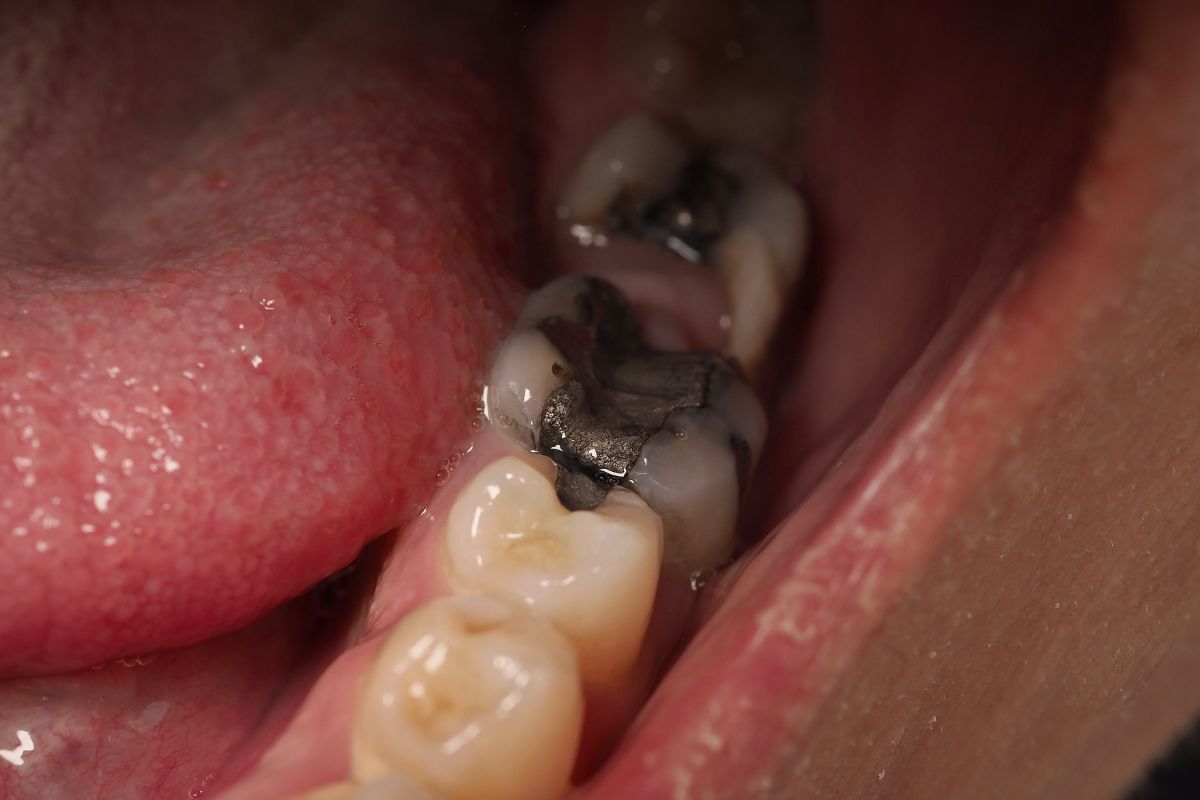
Notice a sudden color change in one of your teeth? It can be quite alarming to look in the mirror and see a tooth shifting from its natural pearly white to a dull gray, yellow, or even deep blue-black shade. Unlike surface stains from coffee, tea, or red wine that can be easily polished away during a routine teeth cleaning, a tooth that turns dark from the inside out is telling a completely different story.
When a tooth changes color internally, it is often a visual SOS. It usually means something is happening beneath the enamel, pointing toward internal damage, trauma, or health issues within the tooth’s core. Understanding why this happens and knowing when to see an experienced dentist can save your tooth and protect your overall dental care routine.
What Causes a Tooth to Turn Gray or Dark Internally?
To understand why a tooth darkens, it helps to look at its anatomy. Beneath the hard, white outer layer of enamel lies dentin, a softer, yellowish tissue, and right at the center is the dental pulp, a collection of living blood vessels and nerves. When trauma, disease, or decay affects these inner structures, the tooth undergoes physical changes that alter its color.
Here are the most common culprits behind an internally darkened tooth:
1. Dental Trauma or Injury
Have you taken a sharp blow to the mouth recently, or even years ago? Even a minor sports mishap, a fall, or a bump can damage the blood vessels inside the pulp chamber. When these vessels rupture, internal bleeding occurs. The blood cells break down, and iron enters the dentin tubules, staining the tooth from the inside out. This discoloration can appear weeks, months, or even years after the initial impact.
2. Pulp Necrosis (Tooth Death)
If a tooth suffers severe trauma or deep decay, the nerve inside can die, a condition known as pulp necrosis. When the pulp dies, the tooth loses its blood supply and vitality. A dead tooth often turns gray, dark brown, or black over time. While it might not hurt immediately, a necrotic tooth requires prompt attention from a professional to prevent serious localized infections or abscesses.
3. Untreated Tooth Decay and Cavities
Cavities start on the surface, but if left untreated, they burrow deep into the enamel and dentin, eventually reaching the pulp. As decay progresses, bacteria invade the inner chambers, breaking down tissue and darkening the surrounding structure.
4. Previous Dental Treatments (Like Root Canals)
In some cases, older root canal treatments can cause a tooth to darken over time. This happens because tiny remnants of pulp tissue or filling materials may remain in the pulp chamber or crown. Modern endodontic techniques have significantly minimized this risk, but older restorations can still cast a shadow beneath the enamel.
5. Aging and Wear and Tear
As we age, our outer enamel naturally thins out, allowing the darker, yellowish dentin underneath to show through. Additionally, years of biting, chewing, and minor micro-traumas can cause a cumulative darkening effect across one or multiple teeth.
Signs of Internal Damage to Watch For
A dark tooth rarely changes color entirely in isolation. It is usually accompanied by other subtle or overt signs indicating that the internal structure is compromised. If you notice any of the following symptoms alongside a graying tooth, it is time to visit our dental office for a thorough evaluation:
- Lingering Sensitivity: Sensitivity to hot or cold foods and drinks that lingers long after the stimulus is removed.
- Spontaneous Pain: A dull ache, throbbing, or sharp pain that occurs without any apparent trigger.
- Swelling or Tenderness: Puffy, tender, or red gums surrounding the discolored tooth, which can indicate an underlying abscess or infection.
- A Small Bump on the Gums: A pimple-like bump (known as a fistula) appearing on the gum tissue near the root of the dark tooth, signaling a chronic infection draining from the bone.
- A Cracked or Chipped Surface: Visible structural flaws that may have allowed bacteria to sneak into the inner chambers.
Ignoring these signs can allow a localized issue to spread, potentially turning a straightforward restorative procedure into a more complex dental challenge.
Can You Fix a Dark Tooth?
The short answer is yes! Modern dentistry offers several effective solutions to restore both the aesthetics and the health of an internally darkened tooth. However, treatment depends entirely on the root cause diagnosed by an experienced dentist.
Diagnostic Evaluation
Before any treatment begins, your dental team will perform diagnostic tests, often including gentle tapping, temperature tests, and digital X-rays, to check the health of the tooth’s root and surrounding bone.
Treatment Options Include:
- Root Canal Therapy: If the darkening is caused by a dying or dead nerve, a root canal is necessary to remove the infected or necrotic tissue, clean the canals, and seal the tooth to stop bacteria from re-entering.
- Internal Bleaching: For teeth that have undergone a root canal but remain gray, internal whitening can be performed. A specialized bleaching agent is placed inside the tooth for a short period to lift the dark pigments from the inside out.
- Dental Crowns or Veneers: If the tooth is structurally compromised, structurally weakened, or resists whitening treatments, placing a custom-matched porcelain crown or a thin front veneer can completely mask the discoloration and restore a natural, vibrant appearance.
Why You Shouldn’t Ignore a Discolored Tooth
It is easy to push a gray tooth to the back of your mind, especially if it doesn’t hurt right now. However, a darkened tooth is a structural warning sign. When the inner pulp dies or becomes infected, the body can no longer fight off bacteria inside that chamber. Left unchecked, the infection can spread beyond the root tip into the jawbone, forming a painful dental abscess and putting your adjacent teeth and overall systemic health at risk.
Proactive dental care stops minor issues from snowballing into dental emergencies. Taking care of a discolored tooth early preserves your natural smile, saves you money down the road, and keeps your mouth healthy and strong.
Protect Your Smile — Book an Appointment Today
Your smile is one of your most valuable assets, and any sudden changes deserve professional attention. If you’ve noticed a tooth turning gray, dark, or yellow, don’t wait for pain to start.
Get expert guidance and compassionate, high-quality dental care tailored to your unique needs. We invite you to visit our dental office to identify the issue and restore your confidence. Book an appointment with Maryland Family & General Dentistry today and take the first step toward a healthy, radiant smile!
Frequently Asked Questions
1. Can a dark tooth heal itself on its own?
No. Unlike skin or bone, teeth cannot regenerate or heal internal damage on their own. Once a tooth’s internal blood supply is disrupted or the pulp dies, professional intervention is required to restore its health and appearance.
2. Is every gray tooth a dead tooth?
Not necessarily. While a gray hue often points to pulp necrosis, a tooth can also appear darker due to deep stains, internal resorption, or shadowing from older dental fillings. A professional examination with imaging is the only way to confirm the exact cause.
3. Can teeth whitening strips fix a gray tooth?
Over-the-counter whitening strips and surface gels only work on extrinsic (outer) stains caused by food and drinks. Because internal discoloration stems from the inside of the tooth, surface whitening will not change its color. Internal bleaching or restorative treatments are required.
4. Does a root canal hurt?
Thanks to modern local anesthetics, advanced technology, and gentle techniques, root canal therapy is no more uncomfortable than getting a standard filling. It is designed to relieve the pain caused by internal tooth infection, not cause it.