



Most people think about their teeth in moments — a twinge of pain, a chipped corner, a cleaning that’s long overdue. What fewer people think about is how their mouth is quietly changing decade by decade, in ways that are largely invisible until they’re not.
If you’re in your 40s, your teeth are entering what dentists consider a critical window. If you’re in your 60s, some of those changes have likely already made themselves known. Either way, understanding what’s happening — and why — is one of the most useful things you can do for your long-term oral health.
Here’s what we actually see in our patients at different life stages, and what it means for how you take care of your teeth going forward.
Your 40s: The Quiet Shift
Your 40s tend to feel like a stable decade for your teeth. No major drama. Maybe a filling here, a crown there. But under the surface, several things are changing — and they’re worth paying attention to.
Enamel Has Been Thinning for Decades
Tooth enamel is the hardest substance in the human body, but it doesn’t regenerate. Every acidic drink, every grinding episode at night, every year of use has been slowly wearing it down since your 20s. By your 40s, that cumulative wear starts to show.
You might notice your teeth looking slightly more yellow or grey — not because they’re stained, but because the inner layer of the tooth (called dentin, which is naturally darker) is becoming more visible as enamel thins. You might also notice more sensitivity to temperature, or that certain foods bother you in a way they didn’t ten years ago.
This isn’t something to panic about, but it is something to monitor closely. A dentist in Silver Spring can measure your enamel wear over time and catch the point where thinning is accelerating before it becomes a structural problem.
Gum Changes Start Here
Gum recession — where the gum line gradually pulls back from the tooth — often begins showing up in the 40s. It can happen because of aggressive brushing, grinding, or early gum disease that went unaddressed. The problem is that recession exposes the root surface of the tooth, which has no enamel covering it and is far more vulnerable to decay and sensitivity.
Many patients in their 40s come to us saying their teeth “look longer” than they used to. That’s often exactly what’s happening.
Dental Work Ages Too
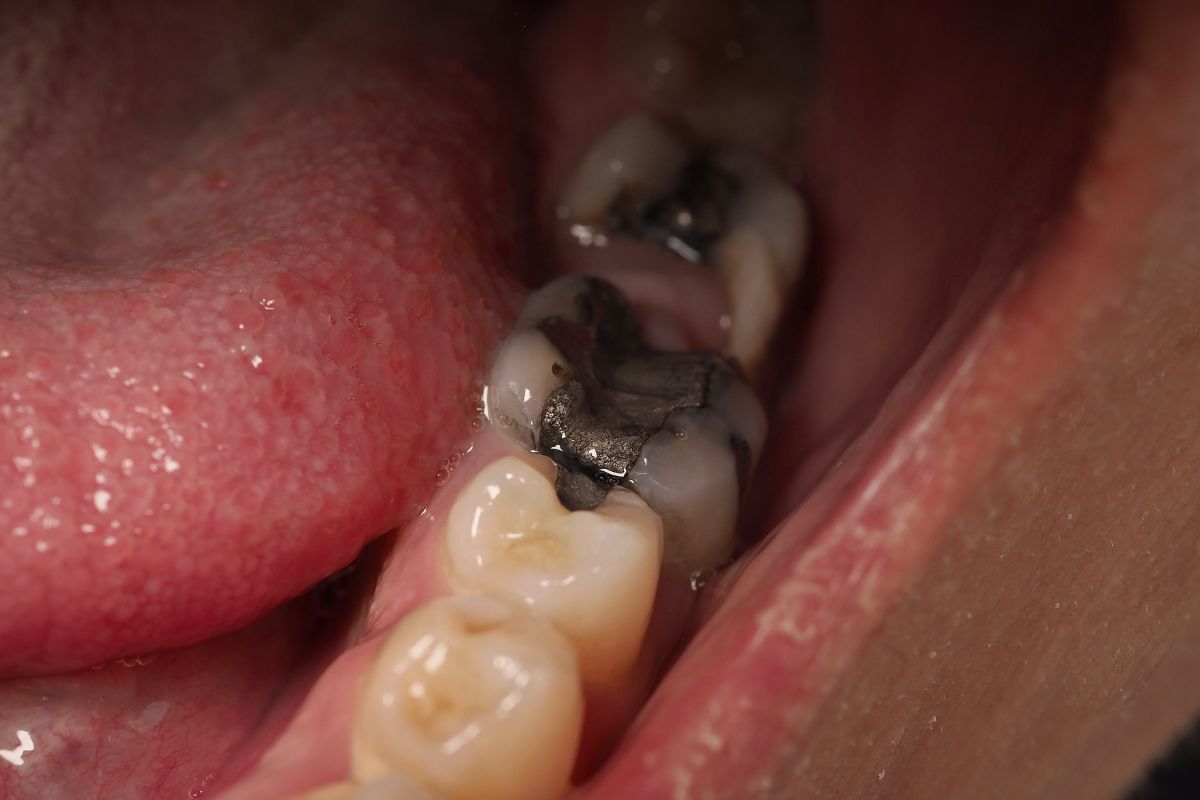
If you had fillings, crowns, or other restorations placed in your 20s or 30s, they’ve now been in your mouth for 15–20 years. Materials have a lifespan. Composite fillings typically last 7–10 years; amalgam fillings can last longer but aren’t indefinite. By your 40s, existing dental work deserves a closer look — not to replace everything, but to check for wear, micro-fractures, or gaps where bacteria might be getting in.
What to Focus On in Your 40s
- Night grinding (bruxism): Many people grind their teeth during sleep without knowing it. A custom night guard can prevent years of accelerated enamel wear.
- Consistent cleanings: Every six months isn’t just a suggestion — plaque hardens into tartar faster as you age, and the stakes of skipping cleanings go up.
- Screening for gum disease: Periodontitis is more common in adults over 40 and is the leading cause of tooth loss. It’s largely preventable when caught early.
Your 60s: What’s Changed and What It Means
By your 60s, the changes that were subtle in your 40s become more pronounced. This doesn’t mean dental problems are inevitable — many of our Silver Spring patients in their 60s and 70s have excellent oral health — but it does mean the approach to dental care needs to evolve.
Dry Mouth Becomes a Real Factor
One of the most underappreciated changes in your 60s is the shift in saliva production. Saliva isn’t just there to help you chew and swallow — it’s your mouth’s natural defense against bacteria and acid. It neutralizes pH, washes away food particles, and coats teeth with minerals that help remineralize enamel.
As people age, saliva production naturally decreases. This effect is often compounded by medications — blood pressure drugs, antihistamines, antidepressants, and diuretics are among the most common culprits. The result is a mouth that’s drier, more acidic, and significantly more vulnerable to decay.
Patients in their 60s who have gone years without a cavity can suddenly find themselves developing them at a rate that surprises them. This is frequently why.
Root Decay Becomes a Primary Concern
In your 60s, the combination of gum recession (which started in your 40s) and dry mouth creates a specific vulnerability: root surface decay. Unlike the crown of the tooth, the root has no enamel. It’s softer, more porous, and far easier for bacteria to damage.
Root decay tends to progress faster than decay on the crown, and it often starts in areas that are hard to see and harder to clean. This is one reason why regular exams and X-rays become more important in your 60s, not less.
Bone Loss in the Jaw
Throughout your life, the bone in your jaw stays dense partly because your teeth are constantly stimulating it through the forces of chewing. When teeth are lost — even one or two — the bone in that area begins to shrink. This process, called resorption, is gradual but cumulative.
By the 60s, patients who have had extractions without replacement (such as with an implant or bridge) may have noticeable changes in their jaw structure. This affects not just appearance but the way remaining teeth sit and function.
At our Silver Spring practice, we use cone beam imaging to assess bone density in detail — particularly for patients who are considering implants or have had teeth extracted years ago. Bone loss that isn’t visible on a regular X-ray shows up clearly on a 3D scan, which lets us plan ahead rather than react.
Existing Dental Work Needs Reassessment
Work placed in your 40s is now 20+ years old. Crowns that were placed decades ago may no longer be sealing properly. Older bridgework may be putting stress on anchor teeth. This isn’t a reason to redo everything, but it is a reason for a systematic review of what’s in your mouth and how it’s holding up.
What to Focus On in Your 60s
- Address dry mouth directly: Mention it to your dentist — there are prescription-strength fluoride treatments, saliva substitutes, and simple habit adjustments (like staying well hydrated and avoiding alcohol-based mouthwashes) that make a real difference.
- Don’t delay replacing missing teeth: Every month a gap sits unfilled, the bone underneath is changing. The window for certain treatments closes faster than most people realize.
- Fluoride treatments at the office: Adult fluoride isn’t just for kids. For patients in their 60s with exposed root surfaces or dry mouth, in-office fluoride applications offer meaningful protection.
- Watch for mouth cancer: The risk of oral cancer increases significantly with age. A thorough oral cancer screening should be part of every routine exam.
What Both Decades Have in Common
Regardless of whether you’re 42 or 67, a few principles apply:
Your mouth is a window into your overall health. Conditions like diabetes, osteoporosis, and cardiovascular disease all have oral manifestations. A thorough dental exam isn’t just about your teeth.
The most expensive dental problems are the ones that were ignored. A small area of gum recession caught in your 40s is manageable. The same issue left unmonitored for 20 years is a much bigger conversation. Consistent care doesn’t just preserve your teeth — it keeps costs predictable.
Your dental care should change as you do. The approach that worked in your 30s may not be the right approach in your 60s. If you’re seeing a Silver Spring dentist and the conversation hasn’t evolved to address age-related changes, that’s worth bringing up.
We see patients across every life stage at our offices in Silver Spring and Germantown, and the pattern is consistent: the patients who fare best in their 60s and 70s are the ones who paid attention in their 40s and 50s. Not perfectly — nobody does — but consistently.
If you’re in your 40s and it’s been a while since a thorough exam, this is a good moment to come in. If you’re in your 60s and noticing changes — sensitivity, dryness, a tooth that doesn’t feel right — those are worth taking seriously sooner rather than later.
We’re not going to tell you what you already know. We’re going to look at what’s actually happening in your mouth and help you make informed decisions from there.
FAQs
Q: How often should I see a dentist in Silver Spring, MD once I’m in my 40s?
Every six months is the standard recommendation, but your 40s are actually when many dentists suggest moving to a more thorough exam schedule. At this stage, enamel wear, early gum recession, and aging dental work all deserve closer monitoring. A dentist in Silver Spring, MD can assess your specific situation and tell you whether twice-yearly visits are enough or whether a more frequent schedule makes sense for you.
Q: Why are my teeth suddenly more sensitive in my 40s even though I haven’t changed anything?
Sensitivity that appears without an obvious cause is usually a sign that enamel has thinned enough to expose the underlying dentin layer, or that gum recession has left some of the root surface exposed. Both are common in your 40s and are worth raising at your next dental visit in Silver Spring. Neither condition is irreversible if caught early, but left unaddressed both will worsen over time.
Q: Is dry mouth a normal part of aging, or is something wrong?
Dry mouth is extremely common in patients over 60, and it’s often a side effect of medications rather than aging itself — blood pressure drugs, antihistamines, and antidepressants are frequent culprits. It matters dentally because saliva is your mouth’s natural defense against decay. If you’re experiencing persistent dry mouth, mention it to your dentist in Silver Spring, MD. There are treatments that make a real difference, including prescription fluoride and saliva substitutes.
Q: At what age does tooth loss typically become a risk, and how do Silver Spring dentists approach prevention?
Tooth loss isn’t inevitable at any age, but the risk increases significantly in your 50s and 60s — primarily because of untreated gum disease and bone loss that accumulated quietly over decades. Most dentists in Silver Spring, MD focus prevention on three things: consistent periodontal screening, early treatment of gum disease before it reaches the bone, and replacing missing teeth promptly so adjacent bone doesn’t deteriorate.
Q: I’m in my 60s and haven’t seen a dentist in a few years. Is it too late to get things under control?
It’s never too late, and this is one of the most common situations we see at our Silver Spring, MD dental practice. Patients who come back after a gap are often surprised at what can be stabilised and treated once they’re back on a regular schedule. The honest answer is that some conditions will be more involved to address than they would have been earlier — but doing nothing guarantees they get worse. The right time to come in is always now.